9 Checks for Buying Refurbished Smartphones Safely
August 27, 2026
AppleCare Versus Repair: Which Costs Less?
August 29, 2026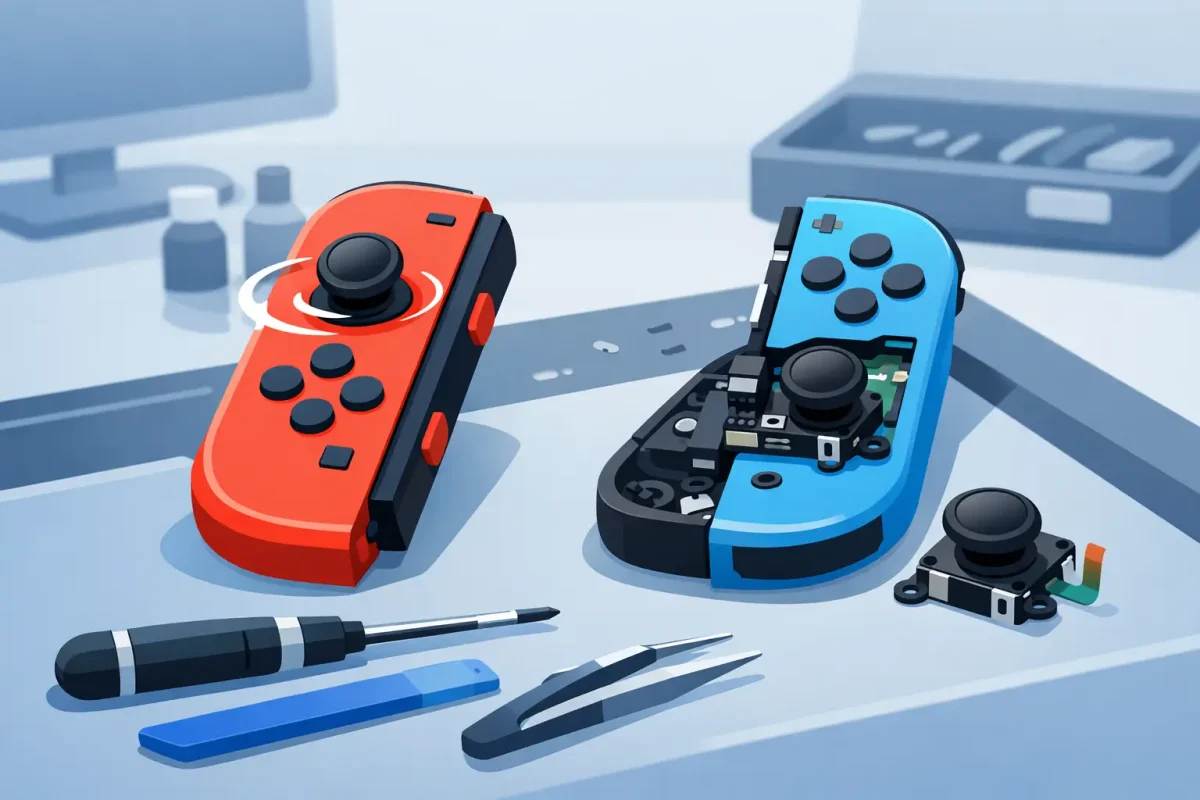
A character walking left when nobody is touching the controller is more than a small annoyance. Joystick drift can cost a close match, make menus frustrating to use, and turn a game night into troubleshooting time. Nintendo joystick repair addresses the causes behind unwanted movement, sticking controls, weak response, and joysticks that will not register at all.
The right repair depends on the controller and the symptom. A Joy-Con with mild drift may respond to cleaning and recalibration. A controller that has been dropped, exposed to liquid, or has a loose stick often needs a replacement joystick assembly. Knowing the difference can save time, money, and a controller that still has plenty of life left.
What Causes Nintendo Joystick Problems?
Joystick drift happens when the controller detects movement even while the stick is centered. On Nintendo Switch Joy-Cons, this usually starts inside the analog stick assembly. Normal use can wear down internal contact surfaces, while dust, debris, moisture, or residue can interfere with the stick’s electrical readings.
Drift is not the only problem. A Nintendo controller may also have a joystick that feels loose, catches in one direction, does not click properly, or responds only sometimes. These symptoms can point to physical damage, a worn mechanism, a damaged flex cable, or an issue on the controller board.
Nintendo Switch Joy-Cons see a lot of use in a very compact design, so even a small amount of wear can be noticeable. Pro Controllers can develop similar problems over time, especially after heavy gaming, drops, or spills. Older Nintendo systems and controllers may have different designs, but the basic repair decision is the same: identify whether the issue is software-related, contamination-related, or a failed part.
Start With These Safe Checks
Before opening a controller, rule out the simple fixes. First, make sure the console and controller have current software updates. Then use the Switch system settings to calibrate the control sticks. Calibration will show whether the joystick is centered correctly and whether it can reach every direction smoothly.
If the stick movement is only slightly off, recalibration may improve the issue temporarily. It will not repair worn internal parts, but it can help confirm that drift is real rather than a game-specific setting or connection problem.
Next, inspect the area around the base of the joystick. Dirt, food crumbs, pet hair, and pocket lint can work their way under the rubber cap. A careful cleaning around the edge with electronics-safe materials can help when debris is the problem. Do not soak the controller, spray cleaner directly into it, or use household chemicals. Excess liquid can travel deeper into the controller and create a more expensive repair.
Also test the controller with more than one game. If the problem appears only in one title, check that game’s control settings and dead-zone options. If it happens on the home screen and across games, the joystick itself is the likely source.
When Nintendo Joystick Repair Needs a New Part
A replacement joystick is usually the most reliable answer when drift returns after calibration or cleaning. It is also the better choice when the joystick is physically damaged, feels unusually loose, will not move smoothly, or fails to register a direction.
Joy-Con joystick replacement involves more than removing a few screws. The controller has small components, delicate ribbon cables, and a battery that must be handled carefully. A torn cable, stripped screw, misplaced spring, or improperly seated connector can leave the controller with additional issues, such as buttons that no longer work or charging problems.
This is where professional Nintendo joystick repair makes practical sense. A technician can inspect the controller, confirm whether the analog stick is actually at fault, replace the failed component, and test movement, clicking, buttons, pairing, and charging before returning it. That diagnostic step matters because a joystick symptom can occasionally be caused by board damage or liquid corrosion instead of the stick assembly alone.
At Device Doctor, certified technicians can diagnose Nintendo controller issues and help you choose the repair that makes sense for the condition of your system. For Charlotte-area gamers, bringing in a controller can be easier than ordering parts, finding specialized tools, and hoping a DIY repair goes as planned.
Is DIY Repair Worth It?
DIY joystick repair can be worthwhile for someone who has experience with small electronics and is comfortable working with precision tools. Replacement kits are widely available, and many gamers enjoy repairing their own equipment. The trade-off is that part quality varies, instructions can skip important details, and a controller can be damaged if the repair is rushed.
Consider a DIY repair only if you have the right screwdriver set, a clean work surface, patience with small connectors, and confidence identifying fragile internal parts. Use quality replacement components rather than choosing the cheapest option available. A low-cost stick may work at first but develop drift or poor responsiveness sooner than expected.
Professional service is often the better route when the controller has liquid damage, a cracked housing, broken buttons, charging trouble, multiple failing controls, or a history of previous repair attempts. It is also a smart choice if you want a clear diagnosis before paying for a part that may not solve the problem.
How to Help Your Controller Last Longer
No controller lasts forever, but a few habits can reduce unnecessary wear. Keep food and drinks away from the console area, especially during long gaming sessions. Store Joy-Cons and controllers somewhere clean and dry rather than loose in a backpack, car, or cluttered drawer. A protective case helps prevent damage when traveling.
Try not to press the joystick harder than the game requires. Fast-paced games can make this difficult, but excessive force wears down moving components and increases the risk of damage after an accidental drop. If a joystick starts feeling different, address it early. Light drift or stiffness is easier to diagnose before it becomes a complete failure.
Regularly updating the console and checking controller calibration can also help you notice a developing issue. It will not stop mechanical wear, but it gives you a quick way to see whether the stick is behaving normally.
Get Back to Playing Without the Guesswork
A drifting joystick does not always mean you need to replace your Nintendo controller. Sometimes calibration or careful cleaning is enough. When the problem keeps coming back, the stick feels damaged, or inputs are missing, a replacement joystick and professional testing are usually the more dependable fix.
Bring in the controller before a small problem interrupts every game. A proper diagnosis can separate a simple joystick repair from a larger issue and help you get back to reliable controls without unnecessary surprises.