Top Battery Failure Symptoms You Shouldn’t Ignore
October 7, 2026
Mail-In Versus Walk-In Repairs: What Works Best?
October 10, 2026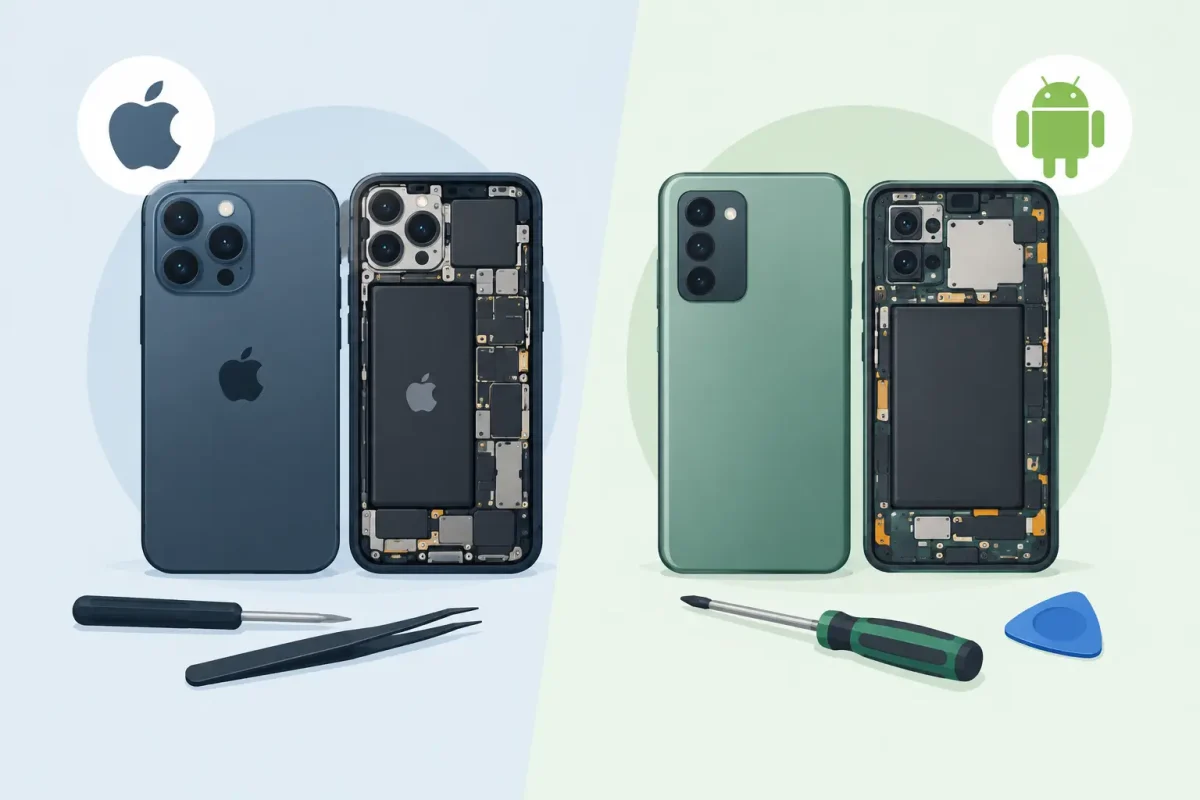
A cracked screen at 8 a.m., a battery that dies before lunch, or a phone that only charges when the cable is held just right can turn a normal day into a headache. An iPhone Android repairability comparison is useful because the better phone is not always the one with the flashiest camera or newest processor. It may be the one you can realistically keep working for years when life happens.
Repairability affects more than the price of a single fix. It influences how quickly a technician can complete the repair, whether quality replacement parts are available, and whether a repair restores every feature you depend on. The answer is rarely as simple as “iPhone” or “Android,” because Android includes dozens of manufacturers and designs.
iPhone Android Repairability Comparison: The Real Question
The most useful question is not which type of phone is easiest to take apart. Most people are not opening a phone at home. The better question is: when your phone breaks, can a qualified repair shop diagnose it, source the right part, complete the repair properly, and get you back to work, school, family, and daily life without an unreasonable bill?
Apple makes a relatively limited number of iPhone models each year. That consistency helps repair professionals. Screens, batteries, cameras, charging components, and housing parts for popular iPhones are widely known and commonly stocked. A repair technician who works on iPhones every day is familiar with the layouts, common failure points, and post-repair checks required for each generation.
Android phones are more varied. Samsung and Google Pixel models have strong repair support and large user bases, while Motorola, OnePlus, LG, Sony Xperia, and other brands can differ greatly by model. A common flagship Android phone may be very practical to repair. A less common or older model may require more time to locate a quality part.
That variety means Android does not have one repairability score. It has a wide range.
Screen Repairs: Similar Problem, Different Details
Screen damage is the repair most customers recognize immediately. On both iPhones and Android phones, modern displays are thin, expensive, and often bonded closely to the frame. Curved displays, edge-to-edge glass, and fingerprint sensors built into the screen can raise the difficulty and cost.
Many iPhone screen repairs are straightforward for trained technicians, especially on widely used models. The challenge is preserving features such as True Tone, proximity sensing, front-camera performance, and Face ID-related components. A rushed repair or poor-quality part can leave the phone functional but less pleasant to use.
Android screen repair can be equally routine on popular Samsung Galaxy and Google Pixel devices. However, a Samsung model with a curved OLED display may cost more than an iPhone with a flat display because the panel itself is more expensive. Foldable phones are in a category of their own. Their flexible inner displays and hinge assemblies make repairs more specialized, and replacement costs can be substantial.
For either platform, the lowest advertised screen price is not always the best value. Ask what type of part is being used, whether touch response and display quality will be tested, and whether the repair comes with a service warranty. A screen should look good, respond accurately, and stay secure in the frame.
Battery Replacement Often Favors Popular Models
A dead battery does not automatically mean it is time for a new phone. If the device is otherwise reliable, a battery replacement can add meaningful life at a fraction of replacement cost.
iPhone battery service is common because Apple provides battery health information directly in iOS, making the problem easier for owners to spot. Popular iPhone batteries are also readily available to repair professionals. The repair still requires care, since batteries are tightly adhered inside the phone and nearby display cables can be damaged during disassembly.
Android battery replacement depends more heavily on the phone’s construction. Some models open from the back, while others require removing the screen first. Glass-backed phones look premium but can make access more delicate. Battery availability may also vary more across brands and model years.
The practical advantage goes to whichever phone has a readily available battery and a repair design that does not require replacing unrelated parts. For a current or recently popular model, both iPhone and Android battery repairs are often very worthwhile.
Charging Ports, Back Glass, and Water Damage
A phone that will not charge may have a worn charging port, compacted pocket debris, cable damage, battery trouble, or a board-level issue. The port itself is not always the culprit, which is why a real diagnostic matters before approving a repair.
Many Android phones use USB-C, so customers may assume every charging-port repair is identical. It is not. On some models, the USB-C port is mounted on a separate charging board and can be replaced efficiently. On others, the port is integrated more deeply into the device and requires additional labor. iPhones use model-specific internal designs as well, even among phones with the same connector type.
Back-glass damage is another area where construction matters. Some iPhone generations require extensive disassembly to replace the rear glass safely, while newer designs can make certain back-glass repairs more manageable. Android phones with glass backs present similar concerns. If the back glass is cracked, it can affect wireless charging, expose the phone to moisture, and create sharp edges, even when the screen is fine.
Water damage is never a guaranteed repair on either platform. Water can corrode components long after the initial accident. Fast professional diagnostics give the device its best chance, especially if it is powered off and not repeatedly charged after getting wet.
Parts Pairing and Software Matter More Than They Used To
Modern phones are not just hardware. They use software checks and calibration to coordinate displays, cameras, batteries, and biometric security features. Apple has expanded repair support and genuine-part options over time, but some repairs may still require proper configuration to retain all available functions and notifications.
Android manufacturers handle this differently. Samsung, Google, and other brands may use calibration procedures or proprietary parts for particular components. Fingerprint readers, cameras, high-refresh displays, and wireless charging systems deserve a full function test after repair.
This does not mean repair is impossible. It means the technician’s process matters. An experienced shop tests the display, cameras, microphones, speakers, buttons, charging, biometric features, cellular signal, Wi-Fi, and Bluetooth when relevant to the repair. The goal is not simply to make the phone turn on. The goal is to return it working the way you expect.
Where Android Can Win on Repairability
Android’s biggest repairability strength is choice. Some Android models are designed with modular charging boards, easier-to-access batteries, or back covers that simplify certain repairs. Parts can also be more affordable on midrange Android devices than on premium iPhones or flagship Galaxy phones.
Google and Samsung’s popular devices benefit from broad repair demand, which generally improves parts availability and technician familiarity. A customer with a mainstream Galaxy or Pixel often has solid repair options for a broken screen, weak battery, camera issue, or charging problem.
The trade-off is fragmentation. Two Android phones that look similar can have very different internal designs, parts availability, and software requirements. Before buying an Android phone, consider the brand’s local repair support, not only the sale price.
Which Is Cheaper to Keep Working?
For current, popular devices, neither iPhone nor Android automatically wins every repair. iPhones often have strong third-party parts availability and predictable repair procedures because so many people use them. Popular Samsung and Pixel devices can be just as practical, particularly for routine screen, battery, and charging repairs.
Costs rise when the phone has a premium OLED screen, curved glass, a foldable design, a rare model, serious frame damage, or liquid exposure. Sometimes a repair is the smart financial decision. Other times, especially when an older phone needs multiple major repairs, replacing it with a dependable refurbished device makes more sense.
A trustworthy repair shop should explain that difference clearly. You deserve a realistic estimate, no hidden fees, and an honest recommendation instead of pressure to repair a device that is no longer worth the cost.
Make Your Next Phone Easier to Own
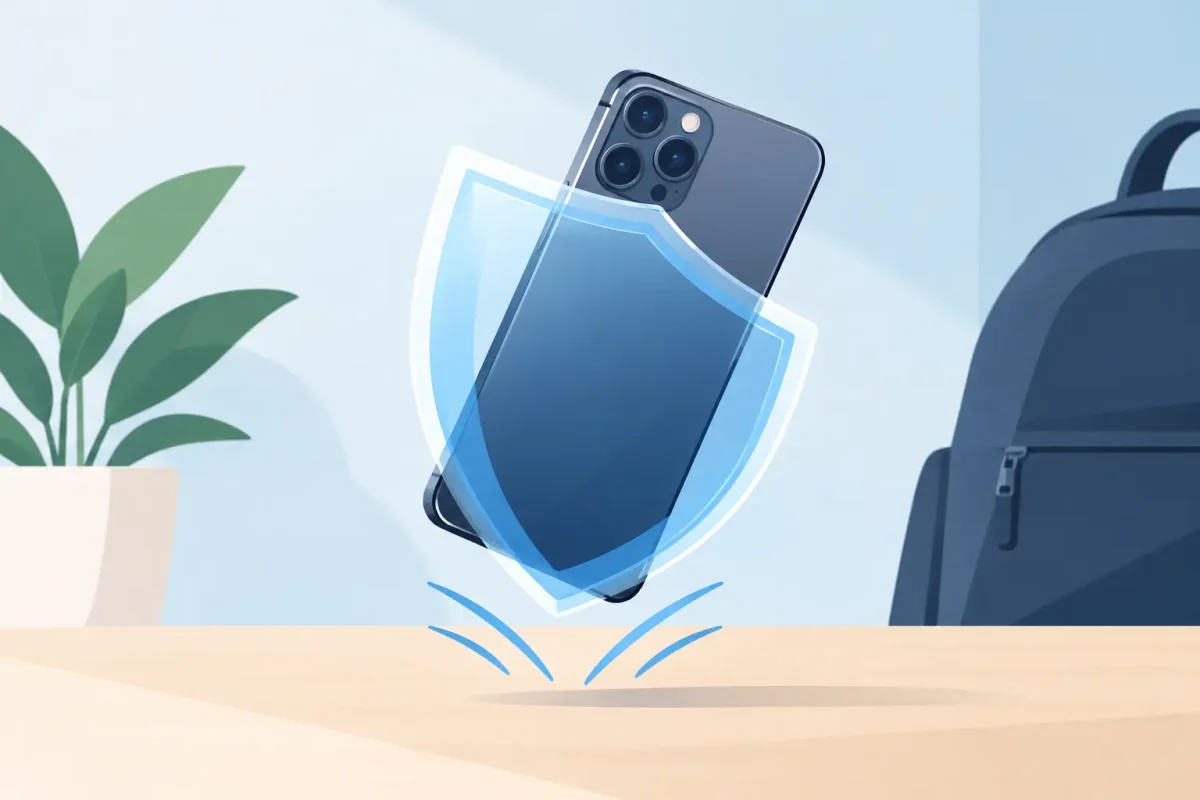
Before choosing your next phone, look beyond storage size and camera megapixels. Check the cost of a screen replacement, whether battery service is available, how long the manufacturer supports software updates, and whether local technicians can obtain quality parts. A protective case and tempered glass can also prevent the repair you never wanted to need.
If your current iPhone or Android has a cracked screen, dead battery, broken camera, charging issue, or water-damage concern, get a diagnostic before assuming it is finished. Device Doctor can inspect the problem, explain the repair options in plain language, and help you decide whether fixing your device is the affordable move. The best phone is the one that keeps up with your life – and has a realistic path back when something goes wrong.