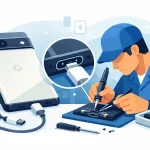
Google Pixel Charging Port Repair That Lasts
August 9, 2026
Face ID Repair Charlotte: What to Do Next
August 11, 2026
A phone dropped in the sink, splashed at the pool, or left in a rain-soaked pocket can look fine at first. That does not mean the inside is fine. For phone water damage repair Charlotte residents need, the first few minutes matter because moisture can keep damaging internal components long after the outside feels dry.
Your phone may hold work messages, school assignments, family photos, payment apps, and the contacts you need to manage the day. The goal is not to guess whether it will recover. The goal is to stop further damage, protect your data when possible, and get a clear answer from a qualified repair technician.
What to Do Right After Your Phone Gets Wet
Start by taking the phone out of the water immediately. Turn it off if it is still powered on, even if the screen appears normal. A powered device with moisture inside has a greater chance of a short circuit.
Remove the case, charging cable, SIM card tray, and any attached accessories. Gently wipe the outside with a clean, lint-free cloth. Hold the phone with the charging port facing down and let excess liquid drain naturally. Do not shake it hard. Shaking can move water deeper into the screen, cameras, speakers, and logic board.
If the phone was exposed to saltwater, a sugary drink, coffee, soda, or pool water, act even faster. Those liquids can leave residue behind as they dry. Residue is often more damaging than clean water because it can corrode connectors and interfere with electrical signals.
Once the phone is off and dry on the outside, bring it in for water-damage diagnostics as soon as you can. Fast action can make the difference between a cleaning and component-level repair versus a device that will not power on again.
What Not to Do With a Wet Phone
The most common mistakes happen when people try to force a quick fix at home. Do not plug the phone in to see whether it charges. Electricity and moisture do not mix, and charging a wet port can damage the charging circuit, battery, or main board.
Avoid using a hair dryer, oven, microwave, or direct heat. High heat can warp displays, weaken adhesive, damage the battery, and push moisture into areas it had not reached. Setting a phone in direct sunlight can create similar problems.
Rice is also not a dependable repair method. It does not remove corrosion or residue from internal components, and rice dust can get into ports and speakers. Air drying may help surface moisture evaporate, but it cannot inspect the inside of the phone or reverse corrosion already underway.
Do not keep testing the device every few minutes. Repeatedly turning it on, pressing buttons, or connecting a charger may increase the damage. Leave it powered off until a technician has had a chance to inspect it.
Why a Phone Can Fail Days After Water Exposure
Water damage is not always immediate. A phone can turn on after a splash, work for a day or two, then suddenly develop a black screen, battery drain, charging issue, camera fog, or speaker distortion. That delay is why professional diagnostics matter.
Inside a phone are tiny connectors, circuits, and shielded components. Even a small amount of moisture can begin corroding metal contacts. As corrosion spreads, the device may lose communication with its screen, battery, cameras, Face ID or fingerprint hardware, charging port, or other components.
Water resistance helps reduce risk, but it is not a permanent guarantee. Phone seals wear down with age, impacts, heat, and previous repairs. A phone rated for water resistance can still be damaged after a drop in water, especially if it is submerged, exposed for an extended time, or has existing cracks.
Phone Water Damage Repair Charlotte Customers Can Expect
A proper water-damage repair starts with diagnostics, not assumptions. A technician should inspect the device, check for visible moisture and corrosion, test key functions, and identify whether repair is practical. The right solution depends on the device model, the type of liquid, how long it was exposed, and which functions are affected.
At Device Doctor, certified technicians diagnose water-damaged Apple and Android phones, including iPhones, Samsung Galaxy devices, Google Pixel phones, Motorola models, OnePlus devices, and more. The focus is on finding the actual problem before recommending a repair, with clear pricing and no hidden fees.
Sometimes the issue is limited to a damaged charging port, speaker, microphone, camera, screen, battery, or button assembly. In other cases, corrosion has reached the phone’s main board. Component replacement can be a practical option when the rest of the device is in good condition. More extensive damage may make repair less cost-effective, particularly on older phones.
That is not bad news. It is useful information. A trustworthy repair shop should explain the condition of your phone, what repair can reasonably accomplish, and whether replacement may be the smarter financial choice.
Data Recovery Depends on the Damage
Many customers are most concerned about photos, texts, notes, and files. If the phone still powers on, do not assume your data is safe just because you can see the home screen. Back it up as soon as the device has been inspected and is stable enough to use.
If the phone will not turn on, data recovery may still be possible, but it depends on the model and the damage. Modern phones often encrypt data, which means the original board may need to function well enough for the device to unlock. A screen replacement alone may restore access if the phone is running but the display has failed. If the main board is severely corroded, recovery becomes more difficult.
Be upfront about what matters most when you bring the device in. If your photos or business files are the priority, tell the technician before any repair work begins.
Signs You Should Bring Your Phone In Today
Some water-damage symptoms need immediate attention. A phone that feels unusually hot, has a swollen battery, emits an odd smell, or repeatedly restarts should be turned off and kept away from flammable materials. Do not charge it.
Other warning signs include a liquid-detection alert, a screen that flickers or shows lines, muffled speakers, a camera lens with condensation, touch controls that stop responding, or a charging port that only works at a certain angle. These can seem minor, but they often point to moisture or corrosion inside the device.
Even if the phone appears to be working normally, professional diagnostics are worth considering after full submersion or exposure to contaminated liquid. Catching corrosion early can prevent a later failure when you need your phone most.
Fast Local Help for Charlotte-Area Phone Owners
Water damage rarely happens at a convenient time. You may be on the way to work in Ballantyne, handling errands near Pineville, leaving class, or shopping near Concord when a single spill changes your plans. A local repair option makes it easier to get an answer quickly instead of mailing your phone away and waiting without updates.
Device Doctor offers convenient walk-in service at Carolina Place Mall in Pineville and Concord Mills Mall in Concord. Customers from South Charlotte, Fort Mill, Indian Land, Matthews, University City, Harrisburg, Kannapolis, Huntersville, and surrounding communities can bring in a water-damaged phone for professional evaluation.
Before you arrive, keep the device powered off, do not charge it, and bring any details you remember about the exposure. Was it clean water, a drink, rain, or pool water? Was the phone submerged or simply splashed? Those details help guide the diagnostic process.
A wet phone does not always need to become a replacement-phone problem. Put safety first, avoid home remedies that create more risk, and have the device checked while there is still a chance to protect the hardware and the information you rely on every day.